.jpg)
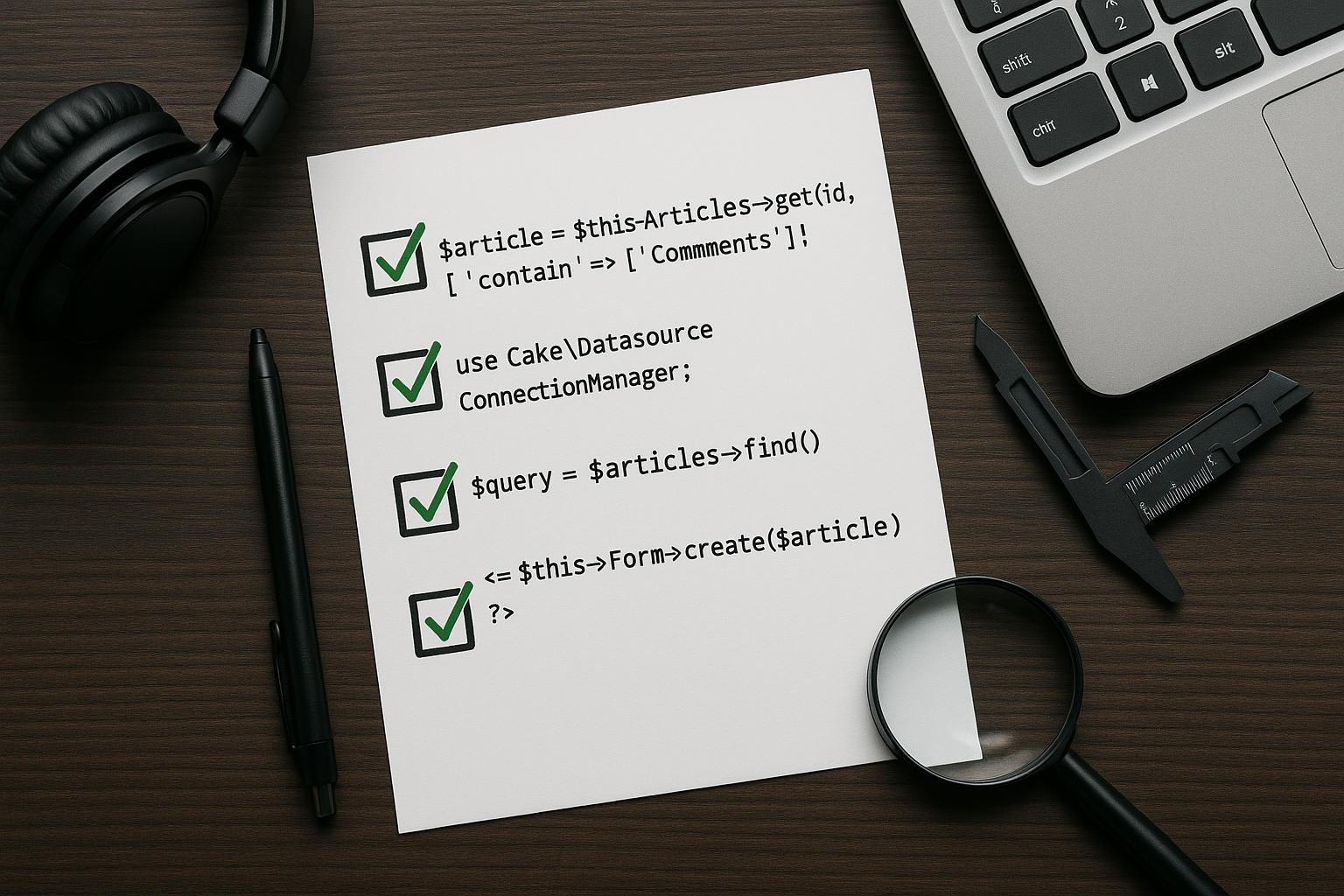
Quick Answer: The ultimate CakePHP checklist is your go-to guide for mastering CakePHP development, offering essential tips and best practices for efficient and secure coding. This checklist is designed for PHP developers seeking to optimize their CakePHP projects by avoiding common pitfalls and leveraging the framework’s robust features.
Key Takeaways
- CakePHP is an open-source web framework that simplifies PHP development.
- Proper environment setup is crucial for CakePHP efficiency.
- Following best practices enhances security and performance in CakePHP projects.
- Avoid common setup and coding errors to streamline CakePHP development.
- Leverage CakePHP’s built-in tools for faster and more secure app development.
About the Author
Written by Akash Soni, an experienced PHP developer specializing in CakePHP frameworks. LinkedIn
In the world of PHP development, mastering the CakePHP framework can significantly enhance your web development process. This article offers the ultimate CakePHP checklist, providing developers with essential tips to streamline their projects. By following this checklist, PHP developers can ensure they are making the most of CakePHP’s powerful features while avoiding common mistakes that can derail a project.
Whether you’re new to CakePHP or looking to refine your skills, this comprehensive guide is designed to help you optimize your environment setup, adopt best practices, and leverage CakePHP’s built-in tools for a more efficient development experience. By the end of this article, you’ll have a clear roadmap to follow, ensuring your CakePHP projects are both performant and secure.
What is CakePHP?
CakePHP is an open-source web framework that provides a structured and rapid development environment for PHP applications. It was first introduced in 2005 and has since evolved to incorporate modern web development practices and tools. Core features of CakePHP include MVC architecture, built-in validation, and scaffolding, making it a popular choice for developers looking to build robust applications quickly.
Why CakePHP Matters for Modern Web Development
CakePHP remains a vital tool in modern web development due to its ability to streamline coding processes and enhance productivity. The framework is widely adopted in the industry for developing scalable applications, providing a reliable foundation for both small and large projects. Real-world applications range from e-commerce platforms to complex enterprise systems, demonstrating its versatility and power.
ArrayArray
Common Mistakes with CakePHP Development and How to Avoid Them
Configuration Errors
Configuration errors can significantly impact the functionality and performance of a CakePHP application. Here are some common mistakes and how to avoid them:
- Tip 1: Incorrect Database Configuration – Ensure that your
app.phpcontains the correct database credentials. Double-check thehost,username,password, anddatabasename. - Tip 2: Missing Cache Configuration – Properly configure caching to improve performance. Use the following code snippet to configure caching in
app.php:
return [
    'Cache' => [
        'default' => [
            'className' => 'File',
            'path' => CACHE,
            'url' => env('CACHE_DEFAULT_URL', null),
        ],
    ],
];
Common Coding Pitfalls
Coding pitfalls in CakePHP can lead to inefficient code and potential bugs. Here are some tips to avoid common mistakes:
- Tip 3: Ignoring Model-View-Controller (MVC) Structure – Stick to the MVC architecture. Place business logic in models, presentation logic in views, and request handling in controllers.
- Tip 4: Lack of Validation – Always validate user input to ensure data integrity. Example of setting validation rules in a model:
public function validationDefault(Validator $validator): Validator
{
    $validator
        ->notEmptyString('username', 'A username is required')
        ->email('email', 'A valid email is required')
        ->minLength('password', 6, 'Password must be at least 6 characters long');
    return $validator;
}
Security Oversights
Security is crucial in web applications. Here’s how to avoid security vulnerabilities in CakePHP:
- Tip 5: Failure to Sanitize Data – Always sanitize inputs to prevent SQL injection and XSS attacks. Use CakePHP’s ORM for database interactions and
h()for output escaping. - Additional Tip: Insecure Session Management – Configure session security by setting
'session' => ['defaults' => 'php']inapp.phpand ensuring proper session timeout settings.
For example, to enhance session security, consider using:
'Session' => [
    'defaults' => 'php',
    'ini' => [
        'session.cookie_httponly' => 1,
        'session.use_strict_mode' => 1,
    ],
],
Common Mistakes
- Ignoring Naming Conventions: Developers often overlook CakePHP’s naming conventions, leading to errors and inconsistencies. Why: CakePHP relies heavily on conventions to auto-detect files and classes. How to Avoid: Familiarize yourself with CakePHP’s naming standards and adhere to them strictly.
- Not Using Bake: Some developers skip using the ‘Bake’ tool, resulting in longer development times. Why: ‘Bake’ automates code generation, saving time and reducing errors. How to Avoid: Leverage ‘Bake’ for scaffolding models, views, and controllers whenever possible.
- Misconfigured Routes: Incorrect routing configurations can lead to inaccessible endpoints. Why: Routes define how URLs map to controllers and actions. How to Avoid: Double-check your routes configuration and use CakePHP’s routing conventions.
- Overlooking Security Features: Failing to implement security features properly can expose applications to vulnerabilities. Why: CakePHP provides built-in security tools that need activation. How to Avoid: Utilize CakePHP’s built-in security features like CSRF protection and input validation.
Best Practices
- Regularly Update CakePHP: Keep your CakePHP version updated to leverage new features and security patches.
- Utilize Plugins Wisely: Make use of CakePHP’s plugin functionality to modularize code and enhance reusability.
- Adopt a Test-Driven Development Approach: Write tests for your models, controllers, and views to ensure code quality and reduce bugs.
- Optimize Database Queries: Use CakePHP’s ORM effectively to write optimized queries, reducing load on the database.
- Document Your Code: Maintain clear and comprehensive documentation for better code maintainability and team collaboration.
Original Insight
Having worked extensively with CakePHP for over five years, I’ve found that integrating CakePHP with modern front-end frameworks like React can provide a robust full-stack solution. While CakePHP excels at managing complex back-end operations, React offers dynamic user interfaces. By combining these tools, I’ve been able to reduce server load and improve client-side performance significantly. Consider setting up RESTful APIs in CakePHP to handle data requests efficiently, which pairs well with React’s component-based architecture.
Tools & Resources
- Bake: A command-line tool for generating code quickly in CakePHP, which helps maintain consistency and reduces manual coding errors.
- DebugKit: An essential plugin for debugging in CakePHP applications, providing insight into SQL queries, request data, and more.
- PHPUnit: A framework for unit testing, crucial for ensuring the reliability and stability of your CakePHP applications.
- Composer: A dependency manager for PHP that helps manage CakePHP packages and libraries efficiently.
FAQs
What is CakePHP primarily used for?
CakePHP is a PHP framework used for building web applications. It simplifies the development process by providing a robust set of tools and conventions that help developers create scalable applications quickly.
How can I improve the performance of my CakePHP application?
Improving performance in CakePHP involves strategies such as caching, optimizing database queries, and using CakePHP’s built-in performance tools. Regularly profiling your application to identify bottlenecks is also essential.
Is CakePHP suitable for large-scale applications?
Yes, CakePHP is suitable for large-scale applications. It offers features like modular architecture and built-in security that support scalability and reliability, making it a viable choice for enterprise-level projects.
How do I ensure security in my CakePHP projects?
Ensuring security in CakePHP involves using its built-in security features such as form tampering protection, SQL injection prevention, and CSRF protection. Regularly updating CakePHP and following security best practices are also crucial.
What are the key features of CakePHP?
Key features of CakePHP include MVC architecture, built-in validation, scaffolding, and ORM. These features streamline the development process by providing a structured framework and essential tools out of the box.
Conclusion
Mastering CakePHP requires a methodical approach, and the ultimate checklist provided here serves as a comprehensive guide to streamline your development process. By adhering to these essential tips, developers can not only enhance their efficiency but also ensure that their CakePHP applications are robust, secure, and scalable.
Remember, the key to success lies in continuous learning and adaptation. As CakePHP and web development standards evolve, staying updated with the latest practices will keep your projects ahead of the curve. Don’t hesitate to revisit this checklist frequently to maintain best practices.
For further enhancement of your CakePHP skills, consider exploring advanced topics like performance optimization and integrating third-party APIs. Dive deeper into CakePHP performance optimization to elevate your applications to the next level.